Diplomacy as a front-line service

When we think of front-line services protecting and serving the British public, we rarely think of diplomats. But that is what they often are, scattered across over 120 countries.
When we think of front-line services protecting and serving the British public, we rarely think of diplomats. But that is what they often are, scattered across over 120 countries, often in small embassies of just 1 or 2 UK staff, albeit supported by hardworking locals. From these far-flung offices, British influence is still projected with far more impact than many imagine in support of our safety and prosperity back here in the UK. Much of this work takes place with little of the glamour or fanfare you might expect from popular depictions of diplomats.
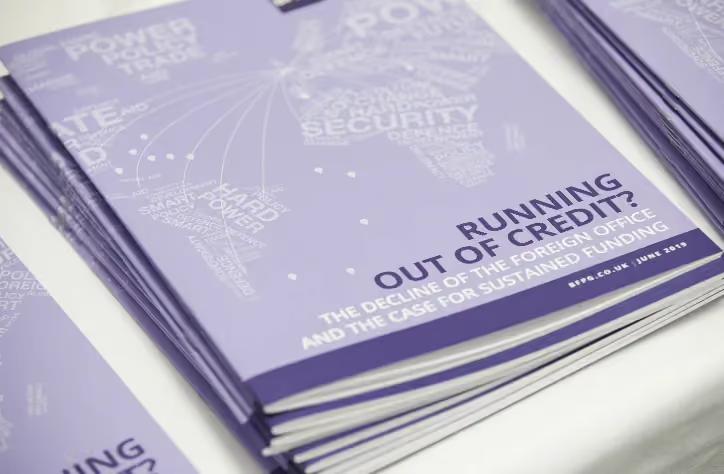
Our new report on the impact of long-term funding constraints on the Foreign Office reveals a department of committed but increasingly over-stretched professionals struggling to meet the sky-high expectations we place on them. Events around Kim Darroch’s resignation are a good illustration of this. In both the leaking of the internal reports and some of the reaction to the fallout, influential people in the UK have demonstrated a casual disregard for the value and importance of diplomacy whilst at the same time taking for granted the global profile and access British diplomacy provides them.
Our report trawls back through government spending data, combined with in-depth interviews with experts and former diplomats. It reveals a department that for decades has been maintaining a façade of grandeur whilst behind the scenes trimming wafer-thin budgets and digging ever deeper into long-nurtured reserves of capital, influence and goodwill. Pay and conditions have failed to keep up with other departments.
It’s not all bad news. The UK retains unique assets and capabilities from which we derive considerable influence and benefit far beyond most of our closest peers. And the Foreign Office is now so lean that the additional funding required to restore and enhance the UK’s diplomatic front line is not necessarily much. Yet as we prepare to leave the European Union, our report finds we are under-equipped to seize the opportunities ahead. In the words of former head of the FCO Sir Simon Fraser, whilst the UK appears to have used membership of the EU as a ‘crutch’ to arrest declining influence, our German and French counterparts have used their membership as a ‘springboard’.
Diplomacy cannot and need not compete with health or education for scarce taxpayers’ money. However, we all need to recognise that diplomats, in their own way, are often as much front-line staff as teachers or doctors in ensuring British citizens remain able to focus on domestic concerns secure in the knowledge that international events around our islands are being understood and influenced in our favour. Investing just a little more in this under-recognised front-line service seems a good deal right now – and that includes valuing and respecting the role of diplomats themselves.
The views expressed in this article are those of the author and do not reflect the views of the BFPG.