Geopolitical and Geoeconomic Lessons from the War in the Middle East
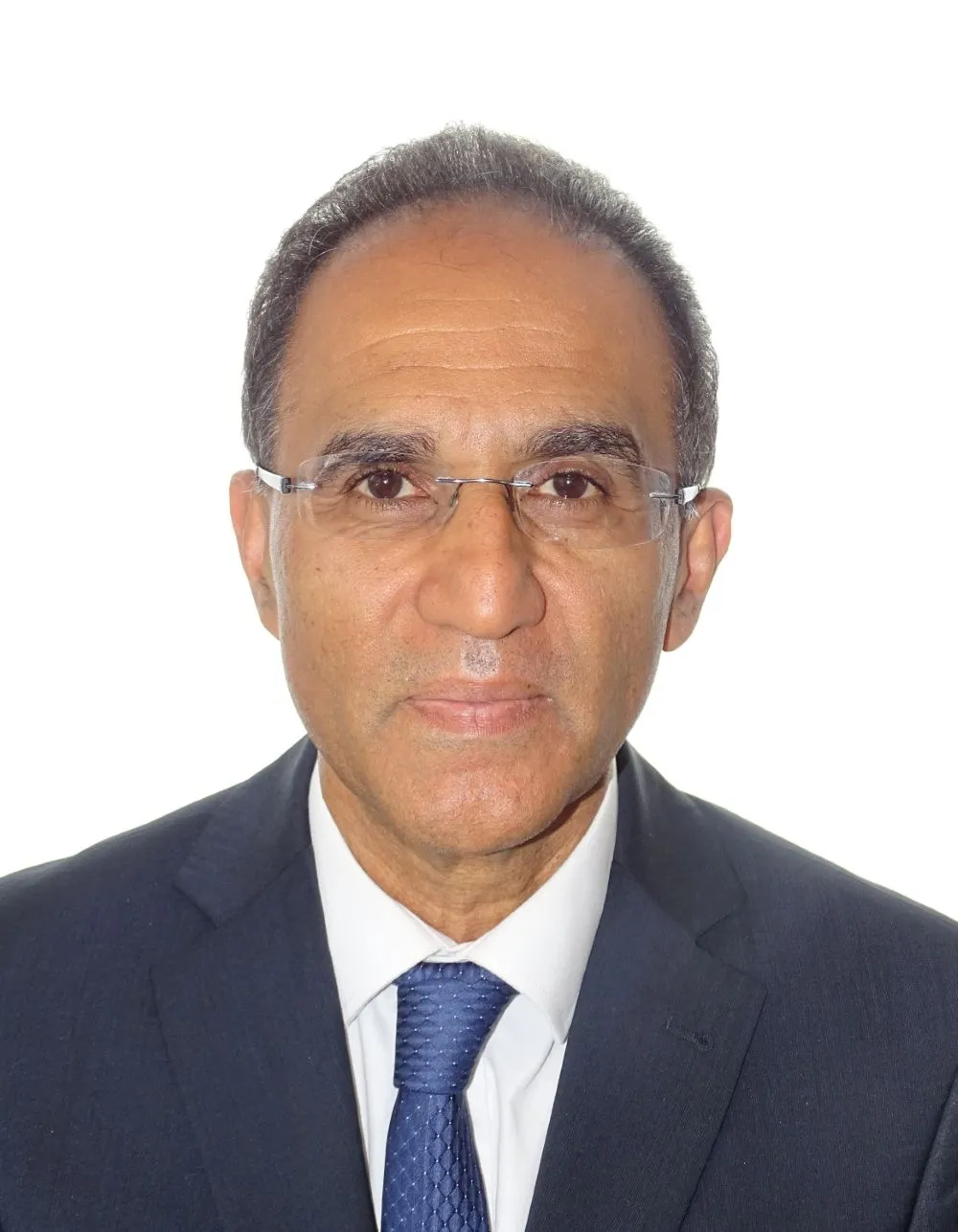
Senior Research Fellow Mohamed Cassimjee examines the implications of, and lessons from, the conflict between Iran, Israel and the United States.
The United States/Israel/Iran war initiated by the United States and Israel, began on 28 February 2026, has had consequences far beyond the Middle East. The breakdown of the June 2026 Islamabad Memorandum of Understanding and the collapse of the ceasefire have deepened regional instability and exposed the wider global costs of the conflict. The war has shown that its effects are no longer confined to the parties directly involved but are felt by citizens and economies across the world.
Those costs include human suffering and loss of life, damage to infrastructure, rising oil and gas prices, higher living costs and growing pressure on vulnerable societies. The war has also contributed to falling stock markets, inflationary pressure, higher borrowing costs for developed countries and heavier debt burdens for poorer countries.
The convergence of foreign and domestic policy is now the norm as the global impact becomes increasingly local. In the UK, 38% of Britons said that limiting the economic consequences of the war in Iran was a top foreign policy priority, second only to strengthening the UK’s national security.
When geopolitics, geoeconomics, geography and global power collide, as they have in this war, the result is cascading instability. It is an irony that this might be called “Epic Fury,” borrowing the term used by the United States for its military operation.
The central lesson is clear: when the Four Gs converge, the exit ramp is diplomacy, not war. The consequences echo King Claudius in Shakespeare’s Hamlet, Act 4, Scene 5: “When sorrows come, they come not single spies, but in battalions.”
The evolving global order
The war has exposed important features of the international global order, most notably the absence of a hegemonic power. Instead, the world can be characterised as a two-tier multipolar order shaped by a divided structure of major powers. The United States and China retain the greatest influence, while Russia and the EU exercise more limited power alongside traditional middle powers such as the UK and France and emerging middle powers such as Turkey, India, Brazil, and Indonesia, amongst others.
This complexity is reinforced by alliances formed to navigate uncertainty in the global order, including BRICS Plus, the G20, the Shanghai Cooperation Organisation (SCO), the Regional Comprehensive Economic Partnership (RCEP), ASEAN and other trade blocs. Minilateral organisations are also gaining prominence as traditional multilateral institutions, including the United Nations, remain deadlocked.
In this multipolar environment, marked by asymmetrical power dynamics and the absence of a dominant hegemon, wars are more likely to reach a stalemate. This places greater responsibility on major and middle powers to help create pathways to peace, as seen in the United States/Israel/Iran and Russia/Ukraine wars.
The response to the United States/Israel/Iran war, both legally and militarily, demonstrated the importance of traditional and emerging middle powers acting collectively. Middle powers can exert significant influence, but they cannot shape global outcomes alone. Substantial progress usually requires the involvement of one or more major powers. The ceasefire that was agreed in June 2026 as part of the MOU, was at the behest of emerging middle powers such as Pakistan, Turkey, Saudi Arabia and Egypt, together with tacit support from a major power, China.
Canadian Prime Minister Mark Carney’s remarks at Davos captured this reality, in recognising both the multipolar nature of the world order and the significance of middle powers: “middle powers must act together because, if we are not on the table, we are on the menu.” This view was confirmed by former British Foreign Secretary Yvette Cooper in the Economist, where she argued that the blockade of the strait required “Britain and middle powers to work together to ensure economic openness while managing risks.”
An interdependent world
The conflict has underlined the depth of global interdependence and the extent to which world markets were intertwined. However, the positive impacts of interdependence and open trade are increasingly giving being regarded as an economic security risk.
Trade is being used in the 21st century less as a tool of cooperation and more as a source of leverage as governments in the face of geopolitical tensions, geoeconomic threats and technological competition respond by mitigating trade dependency. These developments are disrupting supply chains, damaging critical trade infrastructure, restricting flows of critical minerals and constraining access to semiconductors.
Economic chokepoints such as the Strait of Hormuz provide powerful leverage over critical supply chains and can inflict global damage. This highlights the need for a more strategic approach to mitigating geoeconomic risk. Gulf countries are already exploring alternative routes for transporting oil and gas, including new pipelines and revised regional security arrangements such as the Mecca Joint Defence Agreement. Globally, the shift to renewables is also accelerating as a buffer against disruption and as a way to strengthen energy resilience.
Iran’s response to fighting an asymmetrical war against a militarily superior opponent is to weaponise trade through geoeconomics and exploit its geographic advantage. This included blocking the Strait of Hormuz and with the support from the Houthis in Yemen, also seeking to disrupt the Strait of Bab el-Mandeb, a key shipping chokepoint at the southern mouth of the Red Sea and a route towards the Suez Canal.
To increase its power, critical infrastructure in Persian Gulf countries, including the UAE, Saudi Arabia, Oman, Kuwait, Bahrain and Qatar, are also targeted, although responsibility was officially denied. This restricted the flow of oil, gas and other products from the region. The Strait of Hormuz is only 21 miles wide at its narrowest point yet carries around a quarter of global seaborne oil trade, including 38% of crude oil flows, as well as 19% of liquefied natural gas and 13% of chemicals, including fertilisers. The Strait of Bab el-Mandeb has therefore also become a vital alternative export route for Saudi Arabia’s crude volumes.
The Path ahead
As a former senior South African diplomat and member of the anti-apartheid movement, my views are shaped by South Africa’s peaceful transition from apartheid to democracy through dialogue. Furthermore, responsible leadership can also create the conditions for adversaries to sit at the negotiating table as was the case in South Africa. The lesson is that, however long the journey and however severe the hardships, dialogue ultimately beckons, domestically and internationally.
To safeguard global stability, countries and leaders must act responsibly before taking steps that could undermine it. This should strengthen reliance on international law and multilateralism, particularly the UN Charter, as foundations for global peace. This message was strongly echoed at the United Nations (UNGA 81) where many world leaders called for the return to multilateralism, the protection of sovereignty and a rules based international order. This call was also emphasised by the global south at the BRICS Plus summit in September 2026.
It should also renew focus on resolving the Israel-Palestine conflict through a two-state solution, which remains critical to lasting peace across the Middle East and as articulated by the “Joint Foreign Ministers' Statement on the Two-State Solution” which included the UK and on resolving the other major conflict the Russia/ Ukraine war.
Citizens have also shown that they can also be drivers of change, whether by forming human chains in Iran to protect critical infrastructure or through public opinion in the United States opposing the war. These actions demonstrate the public’s ability to influence events, even when executive decisions or governing institutions do not reflect popular will.
Although the United States/Iran war appears caught in cycles of peace efforts followed by attacks and counterattacks, as parties manoeuvre to strengthen their positions, the direction of travel still points towards a negotiated settlement. The April 2026 negotiations, including continued back-channel engagement by the international community, a meeting at the margins of United Nations (UNGA81) and the June 2026 Memorandum of Understanding, although broken, still provide grounds for cautious optimism.
The Iranian nuclear deal, the Joint Comprehensive Plan of Action (JCPOA), endorsed by United Nations Security Council Resolution 2231(2015), shows what can be achieved when parties sit at the negotiating table with the support of the international community and multilateral institutions.
This may be idealistic, but the war could still become an epiphany: a moment that moves the global community towards a more equitable world order and away from the Athenian philosophy: “The strong do what they can and the weak suffer what they must.” Diplomacy is far from dead but waiting to be activated as it is the only path to peace for all sides in the conflict.
The clarion call at the United Nations by the UK Prime Minister who said, “Count on us to stand up for those long-standing British values of fairness and justice – our shared values – and for the UN Charter,” should act as the guiding light.
In the interests of public debate, BFPG regularly publishes contributions from external experts on our website. The views expressed in these articles are the author’s own and do not necessarily represent those of BFPG.
Explore related articles and more.