Explore short, accessible pieces of analysis, research and commentary, on topical issues related to foreign policy and our changing world.

A New Era of Regional Leadership in Foreign Policy
Katarina Kosmala-Dahlbeck examines the future of regional leadership in foreign policy, and the soft power assets of growing powerhouses like Manchester.
The week in foreign policy
Matt Gillow takes a look at the stories and opinion you may have missed in the week in foreign policy for our weekly round-up.

Where is the future of internet governance?
What’s next for the internet, and internet governance? Internet governance – understood by governments, private sector and civil society as the application of rules and procedures with regard to the internet – is a growing area of policy-making. But in the second half of the…

The Divided Continent

Understanding Europe’s social landscape in 2020 and beyond. As populism has become part of the furniture in Europe, focus has shifted away from examining the origins of these anti-establishment movements.
The week in foreign policy
The British Foreign Policy Group team discusses the week in foreign policy, from Angela Merkel’s successor, to what should be in the Defence review.
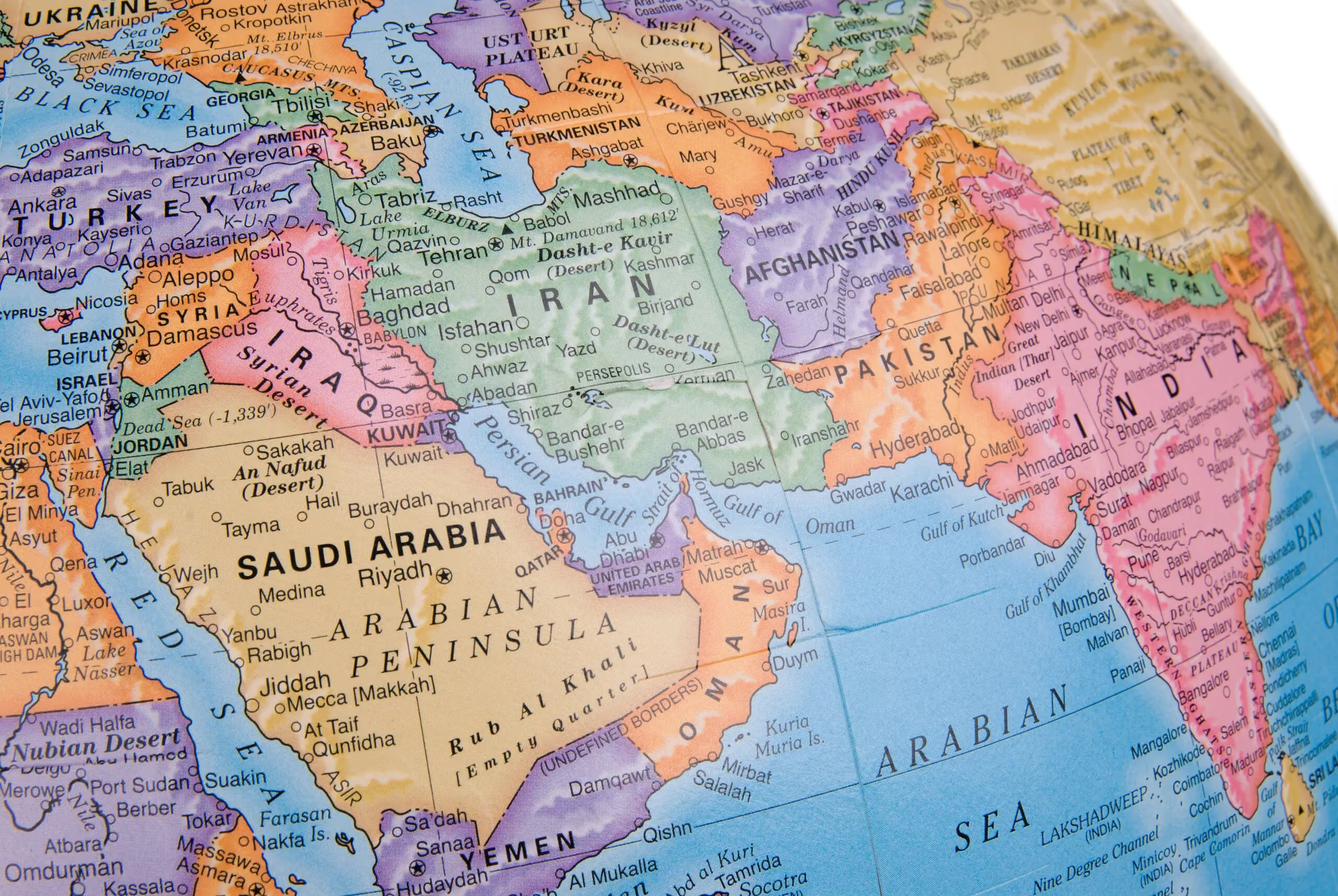
Trump’s Middle East Plan: the Prospects for Peace
President Trump has unveiled his Middle East peace plan, criticised by many. Where does this leave the prospects for peace in Israel-Palestine?
The week in foreign policy
It’s been a big week in politics around the world, and a massive week in foreign policy, with the race to be the Democratic nominee for President in the United States kicking off in Iowa. Closer to home, the United Kingdom has been caught up…

What’s on the agenda for COP26?
The 26th Conference of the Parties, COP26 – the UN Climate Change Conference – takes place in Glasgow this coming November. Today, British Prime Minister Boris Johnson will launch the UK’s hosting of the summit alongside David Attenborough, hailing the summit as ‘an important opportunity…
UK, Huawei and the EU
Britain’s decision in late January this year to allow the Chinese tech firm Huawei to be used in its 5G network came as a surprise to some – with a handful of the members of the National Security Council seemingly staunchly against the move given…

The week in foreign policy
This week has seen the number of those diagnosed with the coronavirus climb above 10,000. As major airlines cancel flights to China, and the World Health Organisation has declared an international health emergency, Dr Claude Posala explores how poorer countries will suffer the most, in The Guardian. Those in countries with less developed health infrastructure, such as the Pacific Islands of Samoa and Fiji, are panicking as the virus spreads.
Boris Johnson woos Africa – the Economist

Research by the British Foreign Policy Group was cited in the Economist, in an article considering Britain’s diplomatic footprint in various parts of the world.
The Security, Defence and Foreign Policy review – what’s in store?
Boris Johnson, the UK’s most comfortable Prime Minister in quite some time, has promised the ‘biggest security, defence and foreign policy review since the end of the Cold War.’ Given the Conservative Party’s comprehensive election victory at the end of 2019, Prime Minister Johnson now…

The week in foreign policy
This week in foreign policy and global affairs saw London host the UK-Africa summit. Around one third of Africa’s leaders attended the conference on 20th January. The Economist assesses Prime Minister Boris Johnson’s attempts to woo leaders, telling them ‘Africa is the future’. As the…
How can the UK lead on climate diplomacy?
This January, our screens have been saturated with devastating images and stories from Australia’s bush fires. Largely absent from the headlines, however, was a parallel crisis in Jakarta.
Why the UK-Africa Investment Summit is an opportunity for Britain
When John Bolton was President Trump’s National Security Adviser, he argued that Africa would soon be home to a new phase of great power rivalries.
The week in foreign policy
After a start of the year characterised by climate crisis on multiple fronts and the threat of war with Iran, this week in foreign policy has been relatively calmer. The US and China have agreed to a ‘phase one’ trade deal, the Labour leadership contest trundles on, and the UK prepares for the UK-Africa Investment summit next week. Meanwhile, the race to become the US Democrat Party’s presidential nominee heats up as the Iowa caucus looms, and a spat between Bernie Sanders and Elizabeth Warren w

The week in foreign policy
In a week of dramatic and turbulent news stories, we have put together our picks of opinion and analysis from across the world that you might have missed.
Looking back on a decade of British foreign policy
Britain began the decade fighting Gaddafi in Libya, championing a ‘liberal-internationalist’ foreign policy that had carried the nation since the end of the Cold War. It ends the decade with this ideal in tatters. Then 2010s have seen the argument for ‘responsible interventionism’ lost. A botched intervention in Libya has left the nation state-less, with warring factions vying for control over oil-rich lands. The publication of the Chilcot Inquiry in 2016 confirmed what many already knew about t

The week in foreign policy
This week has seen the continuation of devastating bush fires in Australia in which 11 people have died and around half a billion animals have lost their lives. The fires have been caused, at least in part, by soaring temperatures and winds. Prime Minister Scott…
The only way is up – matching aspirations with action in space
Space is in. On the 20th November, NATO Foreign Ministers met in Brussels to prepare for last week’s NATO Summit in London. Much of the noise around the summit has been political – in the UK, it was focussed on how Boris Johnson would nullify…

What’s inside the minds of UK students on foreign policy
Inside the minds of UK students on foreign policy Throughout the General Election campaign, the British Foreign Policy Group have been traveling across the UK to listen to the foreign policy views of our youngest voting demographic: students. Whilst voter turnout was lowest amongst young…
In an unsafe world, can NATO last? – Rule Britannia
Director of the British Foreign Policy Group, Sophia Gaston, joined LBC presenter Tom Swarbrick on his new podcast Rule Britannia. Along with the UK Defence Journal’s Henry Smith, they discussed the future of NATO, the foreign policy pledges made by the major political parties in…
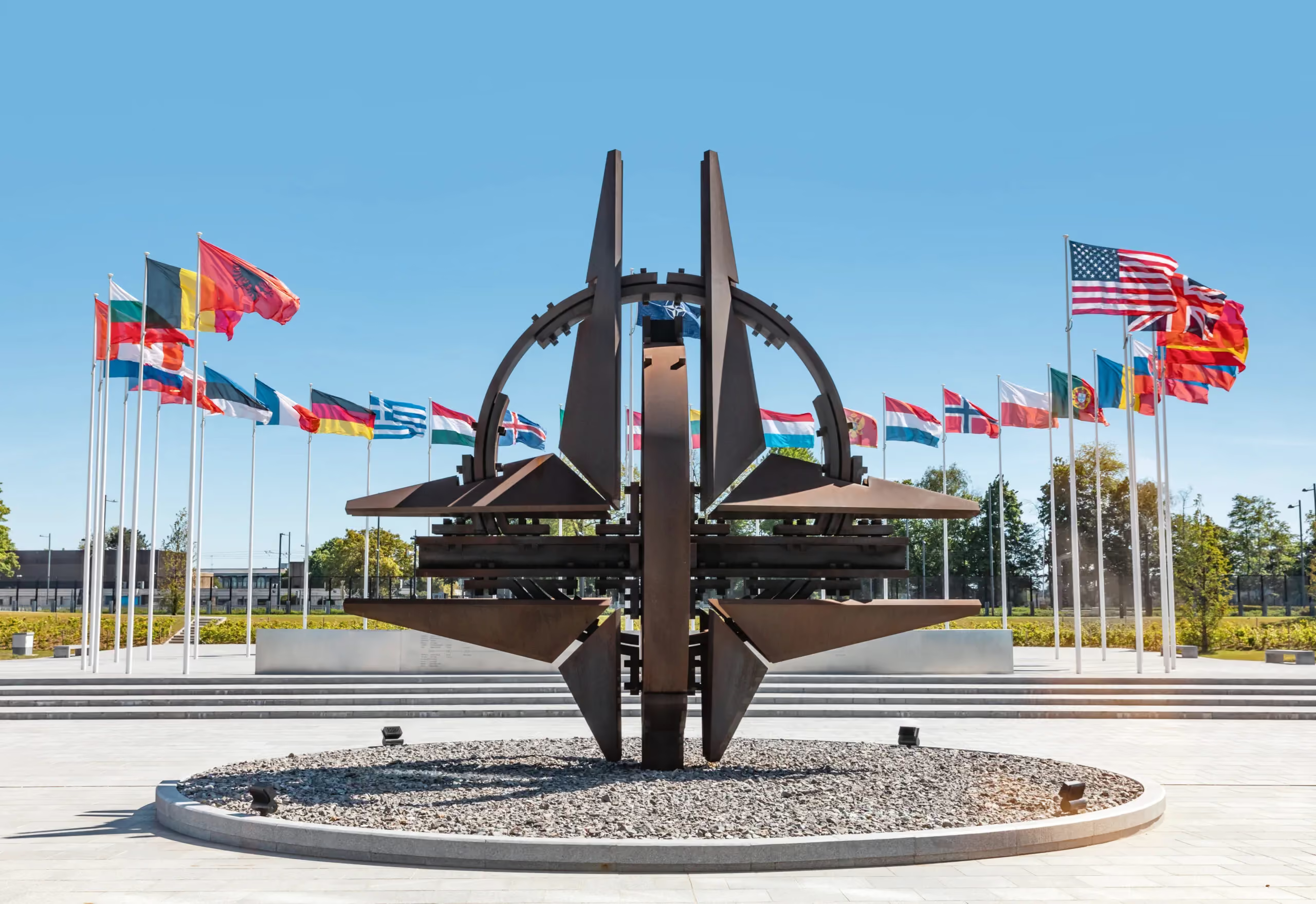
Public opinion on global threats and the future of NATO
The 2019 General Election has been unusual for a number of reasons, but particularly for the marked differences between the parties’ offerings on a range of issues – including foreign policy.
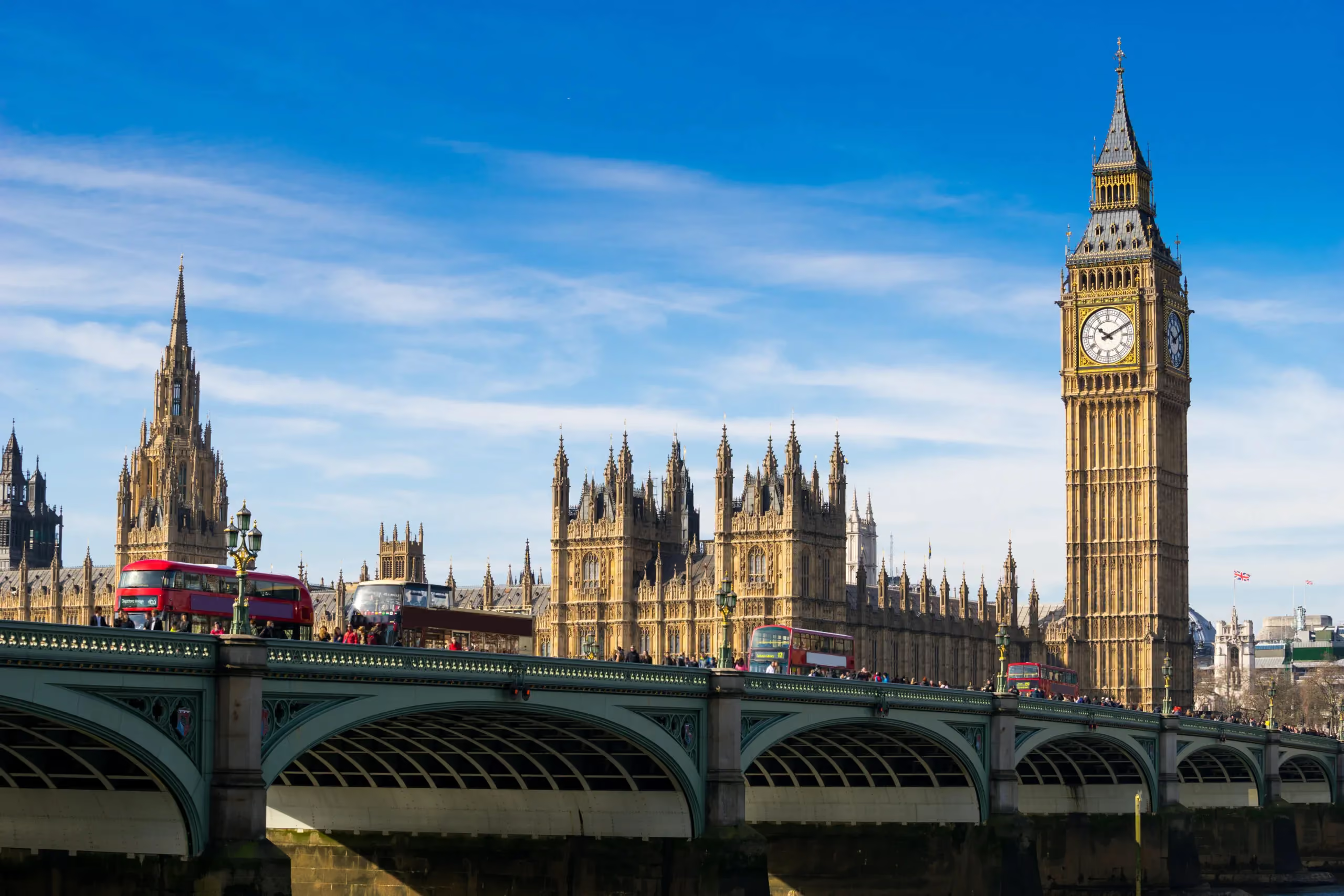
General election manifestos mark the end of British foreign policy consensus
Next month’s election has been variously framed as a ‘once in a generation’ opportunity, or an existential threat, with the future of Brexit, the NHS and our economic model all at stake. For the first time in many decades, so too are each of the…

NATO’s ‘brain-death’ linked to its members’ lack of foreign policy strategy
Emmanuel Macron’s recent interview in the Economist stirred controversy when he declared NATO as “brain-dead” as America “turns its back on the European project”. Regardless of whether one agrees with his assessment, Macron has sparked an important conversation about the future of NATO’s leadership, and…